Pitching Showdown: Brewers Face Rays in High-Stakes World Series Game 5
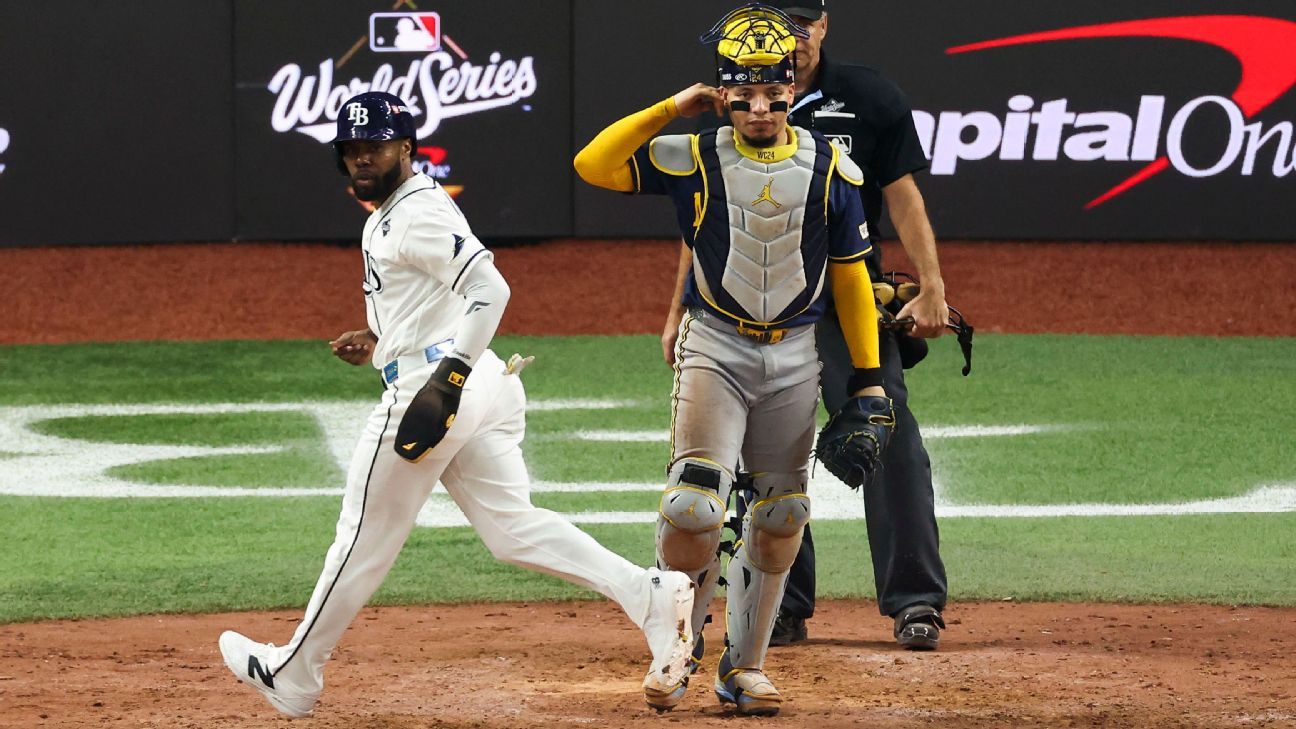
After a marathon, season-extending contest on Tuesday, the Tampa Bay Rays managed a dramatic comeback victory via a walk-off single by Ben Williamson. This win denied the Milwaukee Brewers their first World Series title—for now. With the series standing at 3-1 in favor of Milwaukee, intense speculation has gripped baseball fans: Will the Brewers finally raise the trophy on this second chance? Or will the Rays keep their postseason hopes alive and push the action back to Milwaukee?
The immediate question dominating discussion is who will be available to pitch for each team after Tuesday's grueling effort. Fans are searching for detailed analysis of pitching matchups, because Game 5 promises a strategic battle where every arm and every rest day counts. Experts suggest that while the Brewers have clear advantages in their lineup, they must overcome historical struggles with fielding errors, having committed eight infield errors throughout the playoffs.
From an offensive perspective, the Brewers are viewed favorably for Game 5. They will have their ace, Jacob Misiorowski, starting against a Rays team lacking legitimate pitching options. Furthermore, the Brewers' hitters demonstrated power on Tuesday night, producing 12 of the 13 hardest-hit balls despite having little to show for it. According to Alden Gonzalez, if the Brewers can avoid getting in their own way, they are in excellent shape for the pivotal fifth game.
However, extending the series requires a different strategy from Tampa Bay. The Rays must make Misiorowski work and cannot rely on him carrying a heavy workload, as the Brewers have not done so throughout the postseason. Historically, Misiorowski has been pulled after relatively few innings; in Game 1, he held the Rays to just one run over five innings but was removed after only 78 pitches. While he threw 88 pitches across four innings in his NLDS outing and 94 pitches over 4⅓ innings against the Dodgers in the NLCS, the Brewers could look for more length from him in Game 5, especially since Tampa Bay is likely opting for a bullpen game.
The pitching resources used on Game 4 were staggering: fifteen pitchers were deployed across 23 innings and four hours and twenty minutes, resulting in 367 pitches thrown to 90 batters. This immense expenditure of arms proved difficult for Milwaukee's Pat Murphy, whose team lost a late lead that could have closed out the championship. Conversely, Kevin Cash and the Rays capitalized on their win, getting another chance to play.
The pitching landscape for Game 5 is complex. Misiorowski will start on Wednesday, having started Game 1 on October 23rd, meaning he will be pitching with only four days rest—a challenging schedule. While Murphy would welcome those numbers, Misiorowski has not maintained that level of performance during the postseason. The biggest unknown for Milwaukee is how they will bridge the gap between Misiorowski and key relievers like Trevor Megill or Aaron Ashby in a potential close-out situation.
The bullpen resources are also being mapped out. Megan appeared in Game 4 but faced only one batter, throwing five pitches before giving way to Aaron Ashby. Ashby pitched two and one-third innings, retiring all seven batters he faced on just 31 pitches—a total he has surpassed eleven times this season. Similarly, Abner Uribe threw two innings while facing a minimum of six batters, retiring them on only 19 pitches. These pitchers are expected to be crucial for Milwaukee's plan: Misiorowski followed by some progression involving Uribe, Ashby, and Megill.
For the Rays, the challenge is even trickier. Although their top relievers—Bryan Baker, Kevin Kelly, and Cam Booser—all appeared in Game 4 without being heavily taxed, they cannot afford to roll out a primary starter hoping for deep innings. The biggest complication arose when Nick Martinez, who started Game 1, came out of the bullpen in Game 4 and worked two innings, throwing 33 pitches. This early usage complicates Tampa Bay's plan, forcing them to consider options like starting Game 2 starter Drew Rasmussen on short rest, even if it means a shorter outing than ideal.