Gears of War: E-Day Graphics Performance Tested on 43 GPUs
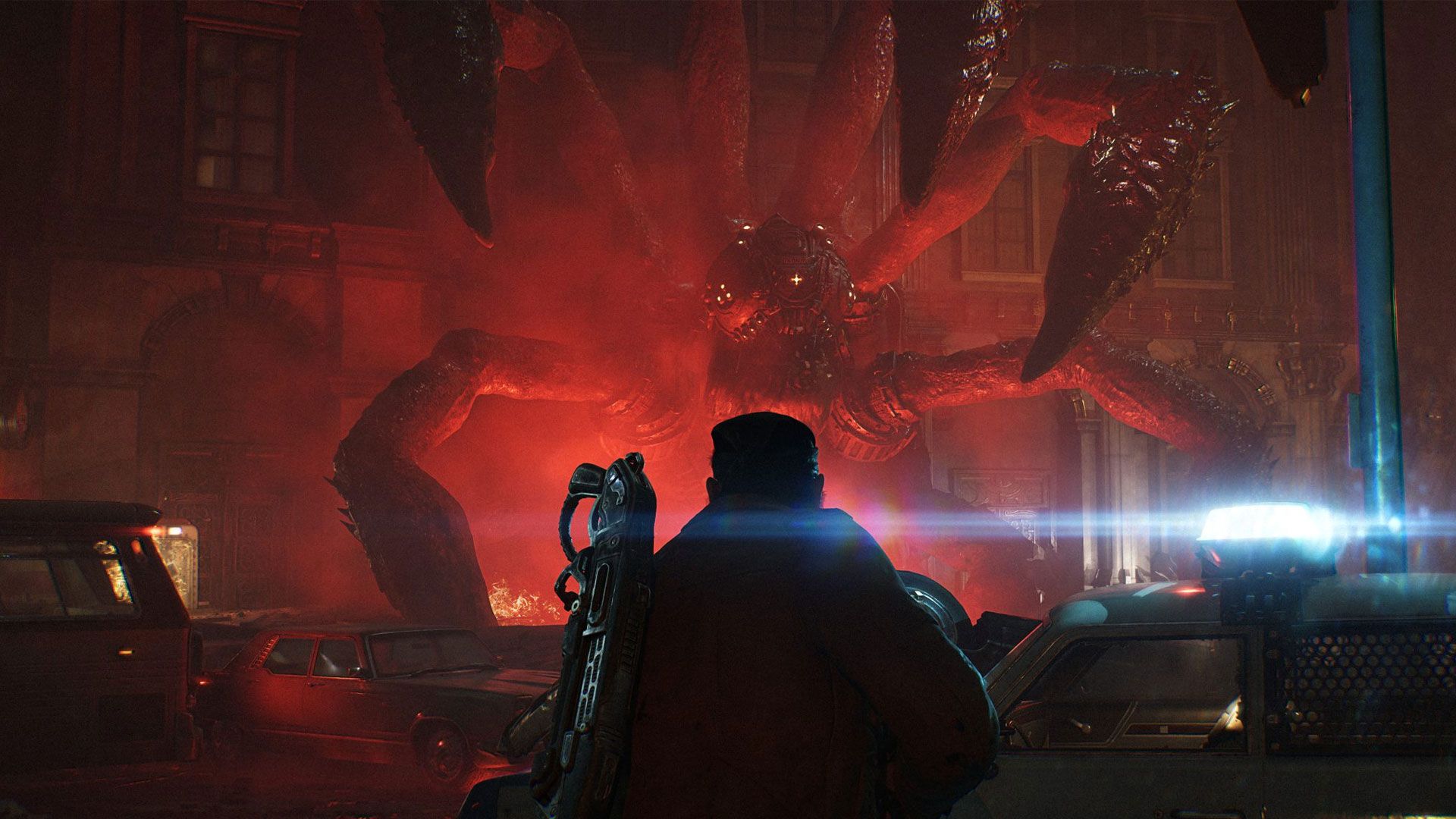
Gears of War: E-Day transports players back to the beginning of one of gaming's most beloved sagas: Emergence Day. To craft this new chapter in the Gears story, developers at The Coalition rebuilt the entire game from the ground up using Unreal Engine 5. Beyond incorporating all-new assets, E-Day is notable as the first shipping title to utilize UE5’s advanced MegaLights technology. This powerful feature allows artists unprecedented freedom by enabling hundreds of dynamic ray-traced light sources to operate in real time.
MegaLights immediately sets a new standard for next-generation real-time graphics. From the moment gameplay begins, the haunting interplay of light and shadow is striking. As protagonists Marcus and Dom, along with new recruits, fight through the initial minutes of Emergence Day, players are struck by the sheer power of dynamic lighting emanating from sources like flashing police cars and ambulances. Furthermore, traversing a ravaged supermarket reveals an amazing diversity of realistic light sources, ranging from flickering televisions to fluorescent tubes in the frozen foods aisles.
To determine what level of graphics horsepower is required for Gears' incredible presentation while maintaining an average 60 FPS, performance testing was conducted across 43 different graphics cards. The game offers five quality presets—Low, Medium, High, Ultra, and Ludicrous (which appears equivalent to Cinematic in other Unreal Engine 5 titles). To give readers a full sense of the image degradation at each level, screenshots were captured at the same location using all five settings.
While turning down settings might be necessary for playable performance, experts recommend not going below Medium. The Low setting severely compromises the visual experience by brutally crushing shadows and losing ambient occlusion, which can give surfaces a somewhat artificial 'cardboard cut-out' appearance, visible even on details like car headlights. From Medium upwards, the differences become more subtle but noticeable: foliage shadows gain softness and detail when moving from Medium to High to Ultra, more bounce light becomes apparent on various surfaces, and textures appear marginally sharper.
In addition to Unreal Engine’s MegaLights, Gears of War: E-Day is also among the first titles to ship with Nvidia's RTX Mega Geometry technology. This feature facilitates efficient ray-tracing for highly complex meshes, such as those used in foliage. The game exposes Mega Geometry as a toggle, making it easy to compare its impact on scene realism. Enabling this tech results in subtle but solid improvements; most notably, trees achieve more natural self-shadowing within their cores, and shadows and ambient occlusion on various surfaces are visibly enhanced. Hanging foliage, often seen spilling from planters early in the game's segments, casts more accurate shadows with the feature enabled, and small objects found in rubble piles can also display crisper, more accurate shadowing.
Technically compatible with graphics cards dating back to Turing, RTX Mega Geometry requires a minimum of 12GB of VRAM to be activated—a specification not commonly required until the RTX 40-series family. While testing was limited, those who tested the feature reported a consistent performance cost of roughly 10% across different GPU generations. For the absolute best image quality in E-Day, enabling Mega Geometry is highly recommended; however, if better frame rates are prioritized over visual fidelity, it can safely be left off.
Gears of War: E-Day also demonstrates impressive vendor inclusivity regarding upscaling and frame generation technologies, supporting DLSS, FSR, XeSS, and Epic's cross-platform TSR. Of these solutions, DLSS consistently appears to offer the best image quality, providing the sharpest and most stable picture both at rest and in motion. FSR 4 on RX 9000-series and RX 7000-series cards performs well, though it is slightly less stable than DLSS when rendering fine details in motion. However, for RDNA 4 and RDNA 3 gamers, upscaling remains a great option. Conversely, players using an RX 6000-series Radeon should be aware that older versions of FSR can significantly worsen the presentation, causing surfaces to visibly boil or crawl at rest, while high-contrast edges show distracting flickering.